
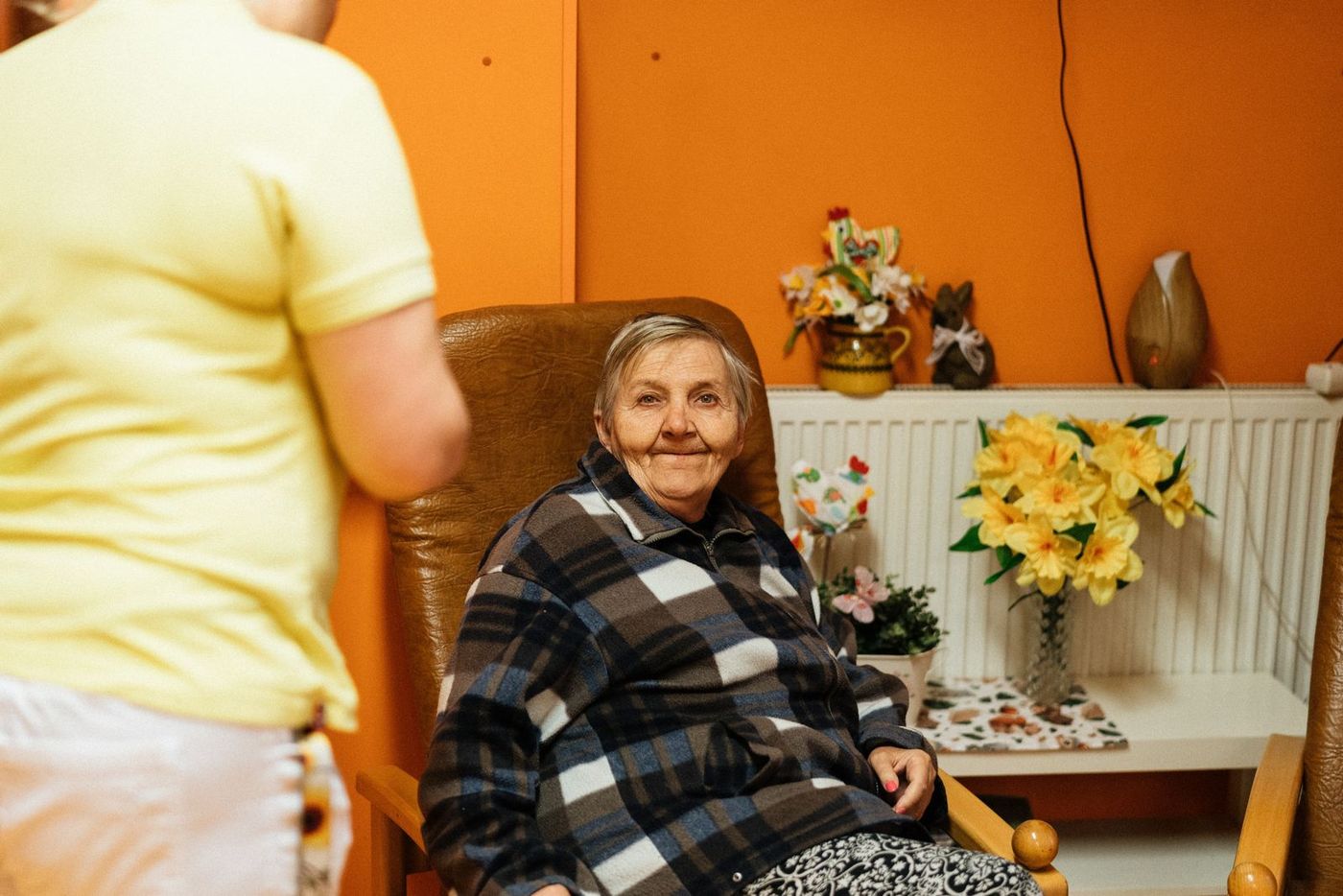
Home care and a care home both provide support, but in different places. Home care delivers help in a person's own home, from a short daily visit to full live-in support, so they keep their routines and surroundings. A care home moves them into a residential setting with staff, meals and activities on site. Home care suits people who value independence; a care home suits those who need constant on-site supervision that is hard to replicate at home.
Choosing between the two is one of the harder decisions a family faces, and it often arrives at a stressful moment. This guide compares the two honestly on cost, quality of life and safety, so you can weigh them against your relative's real needs rather than a gut feeling under pressure. Both options have their place, and there is no single right answer. For the wider picture, our complete guide to home care in the UK sets out everything home care can cover.
What is the core difference between home care and a care home?
The core difference is setting. Home care brings support to the person, so they stay in their own home with their own furniture, pets and neighbours. A care home brings the person to the support, moving them into a shared residential building where staff, meals and activities are on site around the clock. Everything else follows from that basic choice.
Home care ranges from a 30-minute visit to help with washing and medication, right up to a carer who lives in the house and provides one-to-one support day and night. A care home offers a private or shared room within a larger community, with residential homes covering personal care and nursing homes adding registered nurses on site. Most older people say they would prefer to stay at home for as long as possible, and modern home care, especially live-in care, makes that realistic for a much wider range of needs than many families expect.
How do home care and a care home compare side by side?
Side by side, the two differ most on independence, one-to-one attention and how cost is calculated. The table below sets out the practical differences so you can see them at a glance, before we look at cost, wellbeing and safety in more detail.
| Consideration | Home care | Care home |
|---|---|---|
| Where you live | Your own home, familiar and unchanged | A shared residential building |
| One-to-one attention | Yes, dedicated to one person or a couple | Staff shared across many residents |
| Routine and independence | Your own routine, pets, garden and neighbours | Set mealtimes and shared facilities |
| Overnight support | Waking or sleeping night cover, or live-in | Staff on site every night as standard |
| Cost basis | By the hour, or by the week for live-in | A weekly fee covering room, meals and care |
| Best suited to | People who want to stay put and keep control | People needing constant on-site supervision |
Which costs more, home care or a care home?
For lighter needs, home care almost always costs less, because you pay only for the hours you use rather than a full weekly residential fee. For round-the-clock needs, the two move closer together, and live-in care can be better value for a couple, since one carer can support two people in the same home.
As a broad guide, visiting care commonly falls in the region of £25 to £35 an hour, and live-in care around £1,200 to £1,800 a week, with care home fees varying widely by region and whether nursing is included. Treat all figures as a guide rather than a quote. These ranges reflect the real cost of safe, well-staffed care: the Homecare Association, the sector's membership body, sets a minimum sustainable price each year, and for April 2025 to March 2026 it put this at £32.14 an hour, the level it says is needed to pay carers fairly and cover employment costs (Homecare Association).
Whichever setting you choose, the same funding rules apply. After a needs assessment, the council carries out a means test, and in England a person with capital above £23,250 generally pays for their own care, with a sliding scale below that (GOV.UK charging guidance, 2025 to 2026). We break the numbers down further on our paying for care page, and it is worth understanding them before you compare quotes.
Which is better for quality of life and wellbeing?
For many people, home care protects wellbeing better because it keeps them connected to the place, routines and relationships that give a day its shape. Staying at home means your own bed, your own kitchen, the garden you tended and the neighbours who wave hello, all of which matter more as other things become harder.
This is especially true for people living with dementia, where familiar surroundings reduce confusion and distress. A care home, on the other hand, can offer ready-made company and organised activities, which suits people who feel isolated at home or who thrive on the social side of communal living. There is no universal answer here: some people bloom in a busy home, while others find the noise and shared spaces unsettling. National guidance from NICE (guideline NG21) stresses that good home care should promote independence and be built around the person, which is exactly what makes it feel less like a service and more like support. What tips the balance is often company rather than capability. Someone who is perfectly safe at home but rarely sees another person may do better where there is ready-made company, while someone with a garden, a familiar street and visitors dropping in usually does better staying put. Our home and visiting care team can start with a short assessment visit if you are unsure which way it falls.
Is a care home safer for someone with high needs?
A care home is not automatically safer, but it can be the right choice when someone needs constant supervision that is genuinely hard to provide at home. Staff on site every night suit people with high falls risk, advanced dementia or unpredictable night-time needs. That said, home care can manage many of the same risks with the right package.
Live-in care puts a trained carer in the home around the clock, and visiting care can be combined with falls equipment, telecare and regular reviews to keep someone safe. Both settings are regulated: home care and care homes in England must register with the Care Quality Commission (CQC), with Care Inspectorate Wales and the RQIA covering Wales and Northern Ireland. Read the latest inspection report for any service you are considering, whichever setting it is. Safety comes from how well care is planned and staffed, not from the building alone, and the wider workforce pressures the sector faces make continuity of trained carers a genuine quality signal (Skills for Care).
How should your family decide?
Decide by looking honestly at three things together: the person's needs, their wishes, and your budget. Start with what support they actually require day and night, then weigh where they would be happiest, and finally check what each option costs after any funding. When those line up, the answer usually becomes clear.
It helps to ask a few direct questions. Can the person's needs, including nights, be met safely at home with the right package? How much does staying at home matter to them? Is there a family carer who needs support to keep going? Many families are surprised to learn that even significant needs can be met at home, so it is worth pricing up live-in care before assuming a care home is the only option. You can also start with home care and reassess later, since nothing is fixed. If you would like to talk it through with no pressure, explore our home care services, read our step-by-step guide to arranging home care, or get in touch and we will help you weigh it up.